The Wonder Fiber
Sustainable and strong, Manila Hemp is having its moment
 It is a magical fiber that’s been around for quite some time. In the Philippines, abaca, also known as Manila Hemp, has been in use for slippers, basketry, traditional textiles, etc. long before the arrival of the Spaniards.
One of the toughest fibers in the world, abaca cordage was also prized by pre-industrial era shipping companies for its strength, resistance to both salt water corrosion and most fungal and bacterial infection. Unknown to most people of this generation, abaca pulp was used in the production of the once ubiquitous Manila envelope popularized during the American occupation.
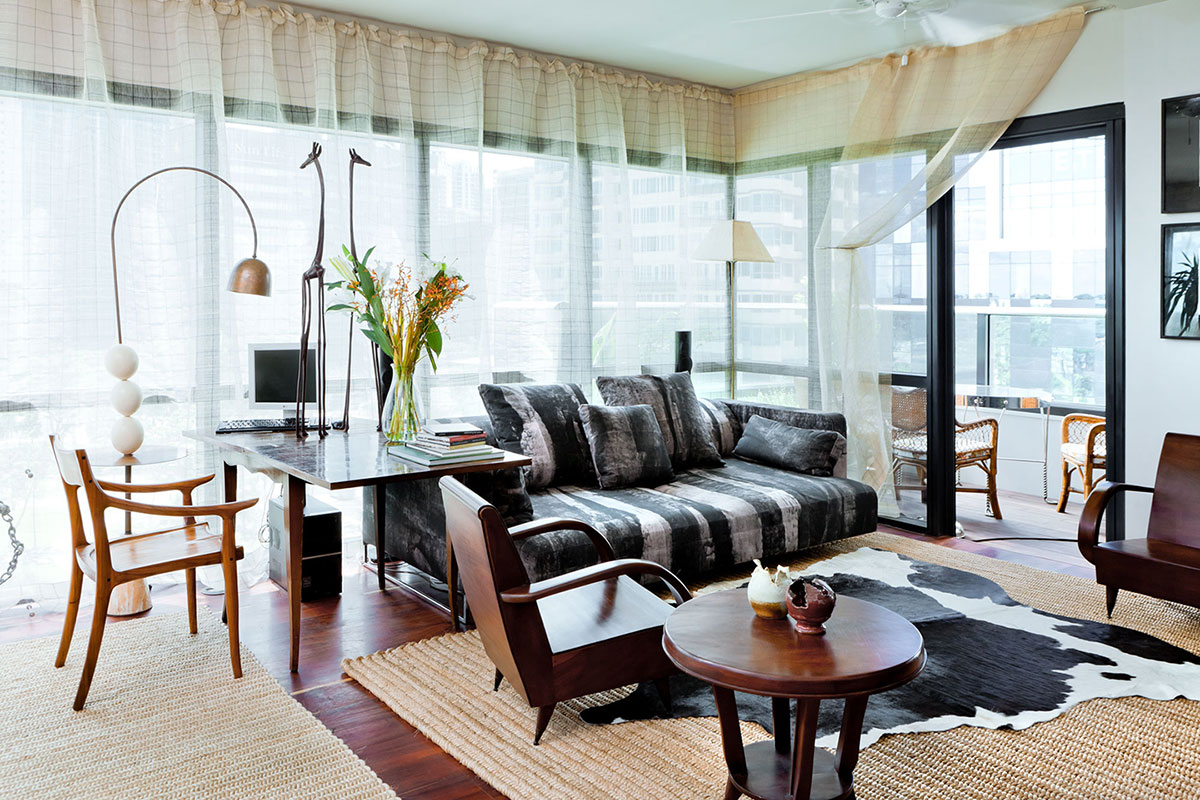 In an architect’s living area, a cow hide thrown over an abaca area rug echoes the colors and graphic character of a modern sofa.
The fiber’s qualities and potentials didn’t escape some enterprising Japanese who set up plantations in Mindanao just around the turn of the twentieth century. This triggered a diaspora of Japanese laborers who settled in Davao, once a top producer of abaca fibers. We all know what happened to those plantations at the onset of the second World War.
After a dip in demand in the seventies, abaca is poised for a big comeback. It is sustainable, strong and even recyclable. Researchers also found ways to mix it with synthetic materials to make composites for the car manufacturing industry. Japanese investors have returned to the country, this time in sleepy Sorsogon to revitalize the province’s abaca industry. Korean researchers aren’t far behind, busy developing the fiber for other manufacturing purposes.
From the beginning, Soumak recognized the fiber’s enduring qualities, the reason for its early focus on abaca rugs and textiles. The company’s patented Binding Weave added stability to the rug’s construction. Abaca rugs, curtains, cushion covers add warmth and a rustic vibe. More than that, the feel of abaca underfoot is soothing and truly therapeutic.